

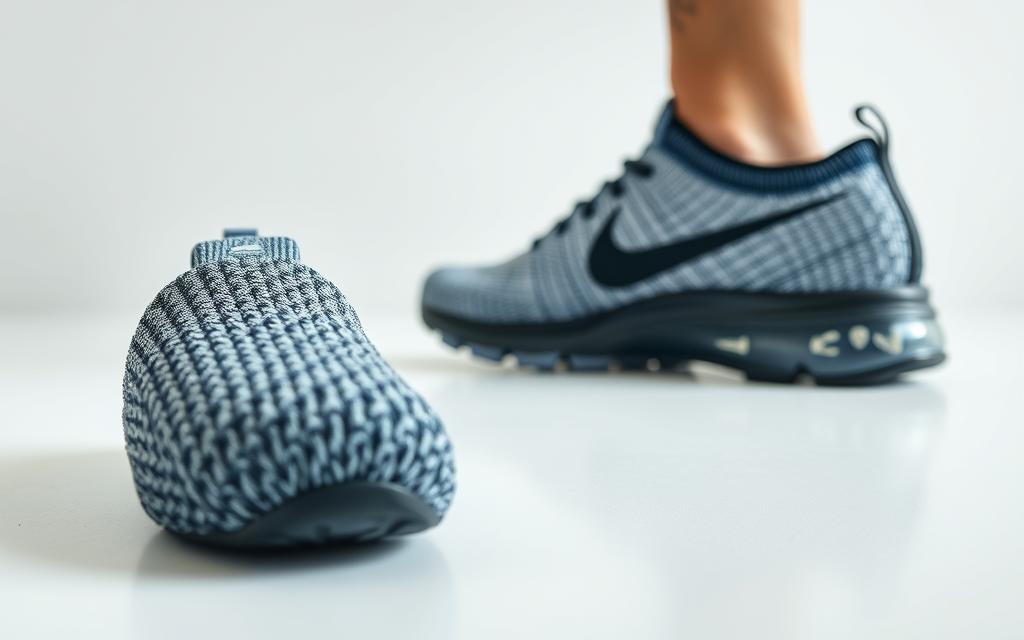
This new way of making shoes is a big change from old methods. Instead of cutting and stitching, it uses digital engineering. This creates the upper part of the shoe in one piece.
The main idea is precision engineering through advanced knitting. This lets designers put support, stretch, and breathability exactly where it’s needed. It’s all about the shoe’s structure.
Athletes get amazing comfort and performance from this tech. It gives a second-skin fit that moves with the foot. It also keeps the shoe strong during hard activities.
This is the future of knitted athletic shoes. It’s about performance and being green. The way it’s made cuts down on waste and makes shoes that are lighter and more responsive for athletes.
What Is Nike Flyknit Technology: The Core Concept
Nike Flyknit changes how sports shoes are made. It uses new methods to create shoes that are both strong and light. This way, shoes are made with less material and more precision.
Defining Precision Knitting in Athletic Footwear
Precision knitting in Flyknit means making shoe uppers with digital tools. It uses strong yarns in a way that’s different from old methods. This makes a single piece of upper without seams or extra parts.
Fundamental Principles of the Flyknit Approach
Flyknit works on a few main ideas. It uses special machines to make uppers with different textures and strengths. This is done by programming the machines with digital designs.
This method lets areas needing support have tighter weaves. At the same time, it uses looser weaves for breathability. The goal is to make a seamless shoe upper that fits the foot well.
Related Posts:
- How to Manage Technology Strategies for IT and Digital Tools

- Is China More Technologically Advanced Than the US A…

- How Technology Has Helped Us: Advancements in Daily…

- What Is mmWave Technology High-Frequency 5G Explained

- What Is Powertrain Technology Engine Transmission…
- What Is DNS Technology The Internet's Phonebook

The Revolutionary Shift From Traditional Manufacturing
Before Flyknit, shoes were made by cutting and sewing. This method used a lot of materials, with about 60% going to waste. The nike knitting process changes this by making the upper in one piece.
How Flyknit Differs From Conventional Shoe Construction
Flyknit and old methods are very different. The old way cuts pieces from big sheets and then sews them together. Flyknit skips these steps, making the upper in one go.
This means Flyknit can include all the needed support and breathability in the knit itself. It’s a big change from the old way.
| Aspect | Traditional Construction | Flyknit Technology |
|---|---|---|
| Material Pieces | Multiple cut pieces | Single continuous knit |
| Production Waste | High (approx. 60%) | Minimal (near-zero) |
| Seams and Stitching | Numerous connection points | Virtually seamless construction |
| Customisation Option | Limited by cutting patterns | High through digital programming |
This shows why Flyknit is better than old methods. It uses less material, which is good for the environment. It also makes shoes that fit better and are more comfortable.
The Development Journey of Flyknit Innovation
Nike’s journey to create Flyknit technology was a major breakthrough in sports shoes. It didn’t happen overnight. It took years of hard work, testing, and teamwork.

Nike’s Research and Development Timeline
The history of Nike Flyknit started with early ideas about knitted shoes. The 1980s Sock Racer showed Nike’s first interest in this idea. But the real start came much later.
In 2008, Nike Flywire technology was introduced. It used strong threads to add support without adding weight. This was the start of Flyknit.
Key Milestones in Technology Evolution
- 2008: Flywire technology debut showing how lightweight materials could provide structural support
- 2010: Intensive R&D phase where engineers reprogrammed knitting machines originally designed for apparel
- 2011: Prototype testing phase with elite athletes providing critical feedback
- 2012: Commercial launch with the groundbreaking Flyknit Racer
Collaborative Efforts and Technical Breakthroughs
Creating Flyknit needed a lot of teamwork. Programmers, textile engineers, and designers worked together. They faced the big challenge of making a knitted upper that could handle sports.
They had to change knitting machines to make them precise. They needed to adjust the stitches, add support areas, and keep the structure strong.
Initial Concept to Commercial Implementation
Turning the idea into a real product was tough. Engineers had to make sure the knitted uppers:
- Kept their shape during sports
- Offered support without extra materials
- Could be made in large numbers
After seven years, Nike launched the Flyknit Racer 2012 in 2012. This was a big change in sports shoes.
The Flyknit Racer 2012 was a huge success. It proved that knitted uppers could be a real performance option, not just an idea.
Technical Specifications and Manufacturing Process
Nike’s Flyknit technology has changed how athletic shoes are made. It moves from old ways to a new digital method. We’ll look at the details of making Flyknit, from picking materials to the final product.
The Precision Knitting Technique Demystified
Flyknit uses a special computerised knitting method. It makes seamless uppers with great precision. Machines follow digital patterns to knit the upper as one piece, without the usual parts of old shoes.
Engineers use complex knitting to make a form that fits the foot perfectly. This digital method lets them adjust the upper’s tightness and density. This gives support where athletes need it most.
The choice of flyknit materials is key to its success. Nike uses strong yarns made from synthetic fibres. These yarns are:
- Very durable in high-wear areas
- Flexible for natural foot movement
- Good at wicking away moisture
- Light but strong
The material’s density changes in the upper. Denser areas support the foot, while open zones let air in. This smart design makes the shoe adapt to the foot.
Production Methods and Quality Assurance
The upper is then shaped through a thermoforming treatment. This step gives the shoe its form and support. Nike checks the shoes in many ways, including:
- Scanning for size accuracy
- Testing for stress points
- Checking consistency in batches
- Testing under simulated conditions
This careful making ensures every Flyknit meets Nike’s high standards. The company’s focus on new manufacturing ways is shown in this Forbes article on scaling up.
Sustainability Considerations in Manufacturing
Flyknit is a big step forward in making shoes better for the planet. It makes about 60% less waste than old methods. This is because of several important factors:
| Manufacturing Aspect | Traditional Methods | Flyknit Technology | Waste Reduction |
|---|---|---|---|
| Material Usage | Many fabric pieces | One knitted upper | 65% less material |
| Production Waste | Big cutting waste | Little trim waste | 60% less waste |
| Energy Consumption | Many steps needed | Simple process | 30% less energy |
| Water Usage | More in wet processes | Little water needed | 50% less water |
The good for the environment goes beyond just less waste. Flyknit needs fewer steps to make, which cuts down on carbon emissions. Nike’s work on Flyknit shows how sportswear can be better for the planet.
This way of making shoes is not only better for athletes but also for the environment. The knitting is precise, wasting little material but giving great performance.
Performance Advantages and Athletic Benefits
Nike’s Flyknit technology offers more than just comfort. It brings real benefits to athletes in many sports. These benefits make a big difference in how well athletes perform.
Enhanced Fit and Adaptive Support Features
Flyknit feels like a second skin, unlike regular shoes. It wraps the foot tightly, keeping it secure.
Nike has spent 40+ years studying how the foot moves. They use this knowledge to make Flyknit fit perfectly.
The design helps athletes move faster and more smoothly. They can run and jump better because of it.
Weight Reduction and Energy Efficiency Gains
Flyknit is incredibly light because it’s made in one piece. Regular shoes have many parts and stitches that add weight.
This lightness means athletes can run longer without getting tired. They use less energy with each step.
Superior Breathability and Climate Control
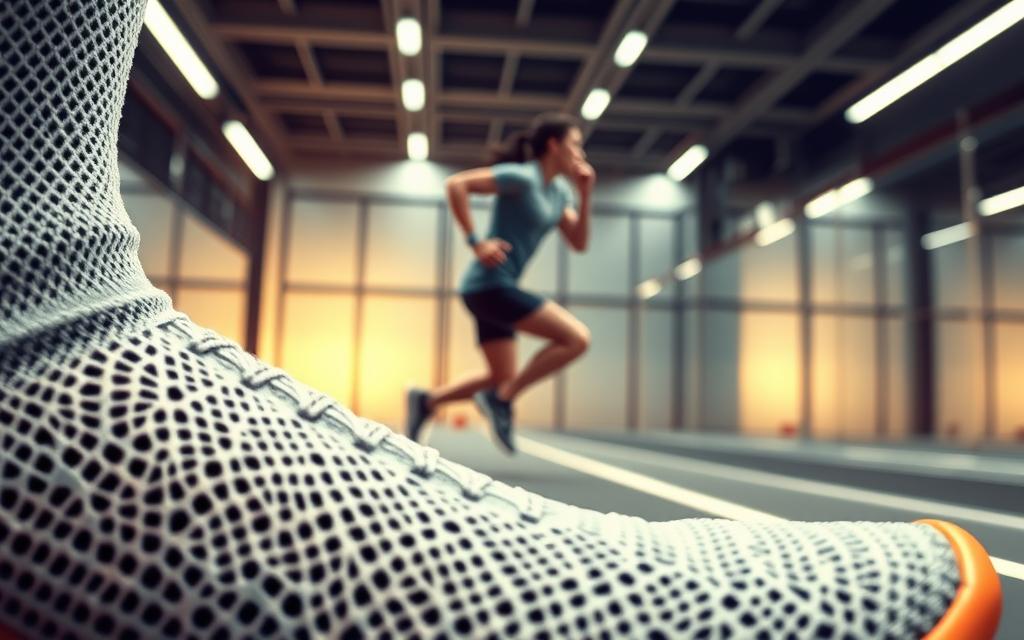
Flyknit’s mesh lets air flow freely. This keeps athletes cool, even when they’re working hard.
It also keeps feet dry and blister-free. This is great for athletes who play sports for a long time.
Football players love Flyknit for this reason. It keeps their feet dry and comfortable during games.
Durability and Long-term Performance Characteristics
Flyknit is surprisingly durable, despite being light. It’s made to last, with strong areas where needed.
This means athletes can count on their shoes for many games and runs. It’s reliable and lasts a long time.
It stays strong even after many uses. Athletes can trust their shoes will keep performing well.
| Sport Application | Weight Advantage | Breathability Benefit | Support Feature | Durability Rating |
|---|---|---|---|---|
| Running | 40% lighter than traditional | Excellent moisture wicking | Adaptive midfoot support | High (500+ miles) |
| Football | 35% weight reduction | Superior air circulation | Ankle stability enhancement | High (season-long) |
| Basketball | 30% lighter construction | Enhanced cooling properties | Dynamic lateral support | Medium-High |
Conclusion: The Impact and Future of Knitted Footwear
Nike Flyknit technology has changed athletic footwear design and making. It’s not just a product; it’s a new way of making sportswear. This method has improved performance in running, football, and lifestyle shoes.
More brands are using knitted technology, thanks to Nike. Mark Parker, Nike’s CEO, said Flyknit is not just for Nike but for all sneakers. He saw how digital design would change athletic shoes.
The future of knitted footwear looks bright. It will be used in more than just sports shoes. It allows for customisation and eco-friendly making. The Vaporfly Elite FlyPrint shows how 3D printing and digital design will improve knitted shoes.
Nike Flyknit sets the stage for more innovation in sports shoes. It makes it easy to create new designs and tailor shoes for athletes. The future will bring even more smart materials and custom fits in knitted shoes.
Flyknit has changed our view of sneakers, moving from mass production to precise engineering. This shift to digital design and making is the new standard for top-notch sports and lifestyle shoes.
FAQ
What is Nike Flyknit technology?
Nike Flyknit is a new way to make shoes. It uses a digital knitting process to create lightweight, snug-fitting uppers. This method is a big change from old ways of making shoes.
How does Flyknit differ from traditional shoe manufacturing methods?
Flyknit is different because it makes shoes in one piece. This cuts down on waste by about 60%. It also gets rid of seams, making the shoes more comfortable and efficient to make.
What are the performance benefits of Nike Flyknit shoes?
Flyknit shoes fit like socks and support your feet in the right places. They are very light, which helps you move faster. They also breathe well, keeping your feet cool and dry. Plus, they are tough enough for intense activities.
How was Nike Flyknit technology developed?
Flyknit came from ideas like the 1980s Sock Racer and the 2008 Flywire. It was first sold in 2012 with the Flyknit Racer. It took teamwork to make the knitting machines work for durability and support.
What materials are used in Nike Flyknit construction?
Flyknit shoes use strong yarns that are picked and engineered for strength and flexibility. The knitting lets Nike add different textures and support where needed, making the shoes comfortable and supportive.
Is Nike Flyknit technology sustainable?
Yes, Flyknit is good for the planet. It makes shoes with less waste than old methods. This helps Nike reduce its environmental impact.
Can Flyknit technology be used for sports other than running?
Absolutely. Flyknit is now used in football, basketball, and training shoes. It’s great for sports because it’s light, breathable, and fits well.
How does the thermoforming process contribute to Flyknit’s structure?
Thermoforming adds shape and strength to Flyknit shoes. It helps the shoe fit better and feel more stable. This process doesn’t add extra weight or bulk.
What role does digital engineering play in Flyknit production?
Digital engineering is key to Flyknit. It uses software to design the knit patterns. This makes sure the shoes fit well and perform well, right from the start.
How has Flyknit influenced the future of footwear design?
Flyknit has changed shoe design for the better. It shows a new way to make shoes that is efficient and good for the planet. It has inspired new ideas in materials and design, not just for sports but for fashion too.